

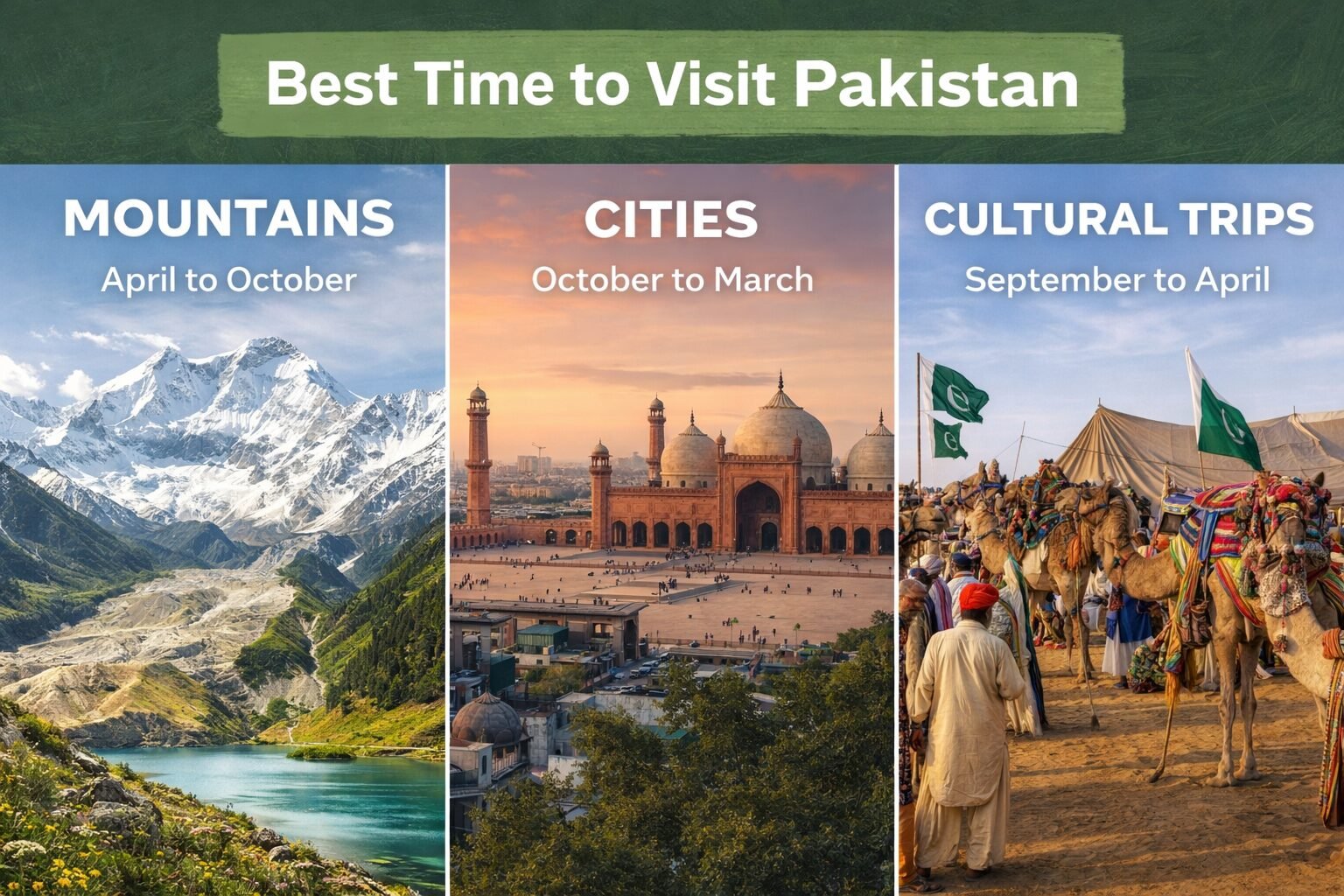
Pakistan is one of those destinations where timing shapes the whole trip. The best month for mountain scenery is not always the best month for city sightseeing, and the season that works well for Lahore may feel completely wrong for Hunza or Skardu. If you are planning a first visit, it helps to think in terms of travel style rather than just temperature.
Some travellers want cool weather for old cities, food streets and historic sites. Others are focused on high valleys, road journeys and long summer days in the north. There is also a middle ground: cultural trips that mix urban stops with lighter scenic travel, without pushing too far into mountain conditions that depend heavily on access and weather.
That is why timing matters even before you start comparing routes and flights to Pakistan. A well-timed trip can make transport easier, walking more comfortable and regional combinations far more realistic. A badly timed one can leave you dealing with heat in the plains or limited access in the mountain regions.
October to March Is Best for Cities and Cultural Travel
For many travellers, the most comfortable season for Pakistan’s major cities is from October to March. This is generally the window when places such as Lahore and Islamabad feel easier for walking, sightseeing and day-to-day travel. Temperatures are usually more manageable than in late spring or high summer, and the overall pace of the trip often feels less tiring.
This is also the strongest period for cultural trips built around architecture, food and history. If your plan centres on old quarters, forts, mosques, markets and city-based day trips, the cooler months are usually the better choice. You can spend longer outdoors without structuring the whole day around heat.
Lahore Is Best in Late Autumn, Winter and Early Spring
Lahore is at its most enjoyable for most travellers from around November to March. This is when the city is more comfortable for long walks through historic districts, evenings out for food and slower sightseeing days. The heat of late spring and summer can make packed itineraries feel much harder than expected, especially if you are moving around the city during the day.
If your main interest is architecture, Mughal heritage, food streets and cultural atmosphere, winter and early spring are usually the safest bets. Late autumn also works well, especially if you prefer slightly milder conditions before the cooler part of the season settles in. Summer is possible, but it tends to suit travellers who are prepared for heat rather than those hoping for an easy-paced city break.
Islamabad Works Well in Spring and Autumn
Islamabad is often easier than other big cities for first-time travellers because it feels more spacious and structured, but timing still matters. Spring and autumn are especially good if you want a comfortable base for city sightseeing, nearby viewpoints and day trips. The winter season can still work well, depending on your tolerance for cooler evenings, while the hotter months can feel less appealing for daytime exploring.
One advantage of Islamabad is that it can fit into more than one type of trip. It works as part of a city-and-culture itinerary in the cooler months, but it also becomes a useful gateway for travellers heading north once the mountain season opens up.
Karachi Is Better in the Cooler Part of the Year
Karachi tends to work best from around November to February if your focus is urban exploration rather than just passing through. The cooler part of the year is generally more comfortable for moving around the city, visiting key neighbourhoods and handling the pace of a large coastal metropolis.
By contrast, the hotter months can feel draining, especially for travellers who are not used to sustained heat. Karachi is still an important stop for some itineraries, but if you want to enjoy it rather than simply endure it, the cooler season is usually the better window.
Hunza Is Best in Spring, Summer and Autumn
Hunza has a very different travel rhythm from the cities. The most popular season usually runs from spring into autumn, with summer being the main window for easy travel, long days and wide access to the valley and surrounding routes. This is when mountain trips feel most straightforward and when first-time visitors usually find logistics easier to manage.
Spring is especially attractive if you want blossom season and a softer, quieter feel. Autumn appeals for colour, clearer scenery and a slightly calmer mood after the height of summer. Summer remains the most practical all-round choice if you want the broadest access and the least complicated planning. Winter can be beautiful, but it is not the easiest season for a first trip centred on smooth mountain travel.
Skardu Is Strongest in Summer and Early Autumn
Skardu is one of the clearest examples of why seasonal planning matters in Pakistan. For most travellers, the best time to go is from late spring into early autumn, with summer being the easiest period for road journeys, valley travel and access to the wider landscape. This is when the region is most straightforward to include in a broader mountain itinerary.
Early autumn can also be an excellent choice if you want dramatic scenery with fewer peak-season crowds. Spring can work, but conditions are usually less predictable. Winter is a very different type of trip and tends to suit travellers who are specifically seeking cold-weather landscapes rather than a general first-time mountain route.
The Northern Routes Are Best When Access Is Reliable
Popular northern routes, including journeys through Gilgit-Baltistan and the wider mountain belt, are usually best planned for the warmer part of the year. Summer is the simplest season for most visitors because road access is more dependable, conditions are easier for longer overland trips and the region is set up for tourism at full pace.
That does not mean every mountain trip must happen at the exact height of summer. Spring and autumn can both be rewarding, especially if you want blossom or autumn colour. The key difference is that these shoulder seasons need a little more flexibility. If your priority is ease, summer wins. If your priority is atmosphere and scenery, late spring or early autumn can be even more appealing.
Cultural Trips Work Best in the Cooler Months
If your focus is not just one city but a broader cultural journey, October to March is usually the strongest window. This is the season that makes the most sense for routes built around Lahore, Islamabad and other lower-altitude stops where history, architecture and food are central to the experience.
This timing also works well if you prefer a slower itinerary with museums, old city walks, heritage sites and evenings outdoors. The cooler months make all of that more comfortable. It is the best season for travellers who want depth rather than distance.
Mountain and City Trips Are Harder to Combine Perfectly
One of the biggest planning mistakes is assuming there is one ideal season for everything. In reality, Pakistan often asks you to choose what matters most. The best weather for Lahore and Karachi is not the same as the most practical season for Skardu and Hunza. That is why mixed itineraries need thought.
If you want both mountains and cities in one trip, the shoulder periods often offer the best compromise. Late spring can work well if you want to combine Islamabad with the start of the northern season. Early autumn can also be strong, especially if you want mountain scenery without peak summer crowds while still keeping city weather manageable. These are often the smartest windows for travellers who want variety without forcing the itinerary.
A Seasonal Breakdown That Keeps Things Simple
For city travel, think October to March.For Lahore, aim for late autumn through early spring.For Islamabad, spring and autumn are especially comfortable.For Karachi, the cooler winter months are the easiest.For Hunza, look at spring, summer and autumn depending on whether you want blossom, full access or autumn colour.For Skardu, summer and early autumn are usually the safest choices for a smooth trip.For wider northern road routes, the warmer months are generally the most practical.
Final Thoughts
The best time to visit Pakistan depends less on one perfect month and more on the type of trip you want. If you are travelling for cities, history and cultural stops, the cooler months are usually the strongest choice. If you are heading for Hunza, Skardu and the mountain regions, summer and the shoulder seasons make far more sense. If you want a bit of both, late spring or early autumn often give you the best balance.
The smartest way to plan is to build the itinerary around the region first, then match the season to it. Pakistan rewards that kind of planning because the country changes so much from one area to the next. Get the timing right, and the whole trip tends to feel more natural, more comfortable and much more memorable.