

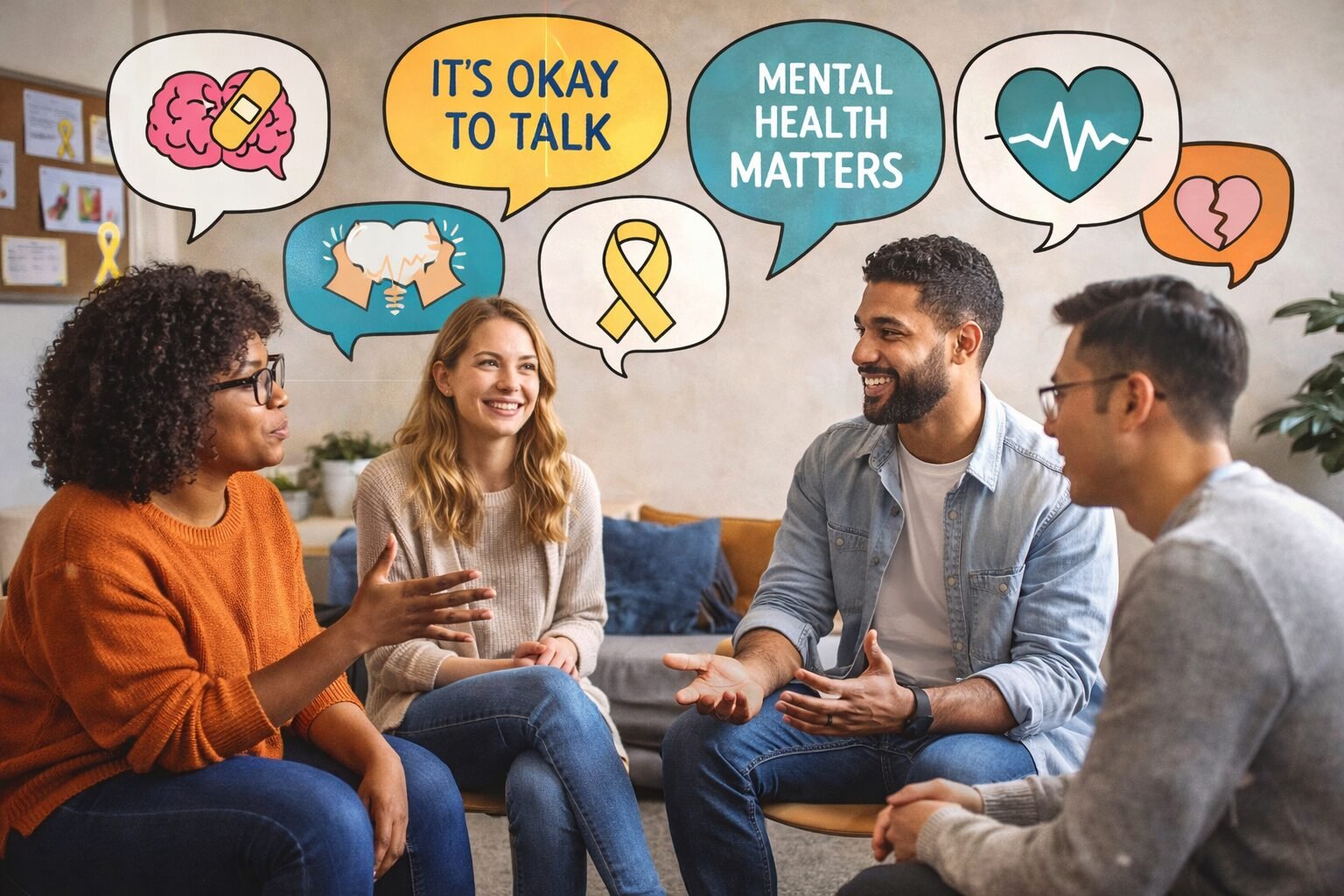
For generations, mental health has been treated as a private struggle something to endure quietly rather than discuss openly. While society has made meaningful progress in recognizing the importance of emotional well-being, stigma still lingers in families, workplaces, schools, and communities. Breaking the stigma around mental health conversations is not simply about encouraging people to speak up; it is about reshaping attitudes, dismantling harmful myths, and creating environments where vulnerability is met with understanding instead of judgment.
In a world where stress, anxiety, and burnout are increasingly common, normalizing conversations about mental health is more urgent than ever.
Understanding the Roots of Stigma
Stigma surrounding mental health often stems from misunderstanding and fear. Historically, mental illness was poorly understood and frequently associated with weakness, instability, or even danger. Cultural beliefs in some communities equated emotional struggles with a lack of resilience or faith. These misconceptions led to silence and shame.
Even today, subtle forms of stigma persist. Phrases like “just toughen up,” “it’s all in your head,” or “others have it worse” may seem harmless but can discourage individuals from seeking help. Many people worry that admitting to anxiety or depression will make them appear unreliable, incompetent, or incapable.
Breaking stigma begins with acknowledging that mental health conditions are not character flaws. They are complex experiences influenced by biology, environment, trauma, and life circumstances. Just as physical illnesses deserve care and compassion, so do mental health challenges.
The Cost of Silence
When mental health conversations are suppressed, the consequences can be severe. Individuals may delay seeking treatment, leading to worsening symptoms. Isolation often intensifies feelings of hopelessness or shame. In extreme cases, untreated mental health conditions can lead to self-harm or suicide.
Silence also affects relationships. When people feel unable to share their struggles, misunderstandings arise. A friend might interpret withdrawal as disinterest. An employer might mistake burnout for laziness. Without open communication, empathy is replaced by assumptions.
Moreover, silence reinforces the illusion that mental health challenges are rare. In reality, millions of people experience anxiety, depression, trauma-related disorders, and other conditions. When no one speaks about it, those struggling may believe they are alone. Breaking stigma helps reveal the truth: mental health challenges are common, and support is available.
The Power of Open Dialogue
Open conversations create connection. When someone shares their mental health journey, it often encourages others to do the same. Vulnerability can be contagious in a positive way. Hearing someone say, “I’ve struggled too,” reduces isolation and fosters solidarity.
Dialogue also promotes education. Misconceptions fade when people learn about symptoms, treatments, and recovery stories. For example, understanding that depression involves changes in brain chemistry not just sadness can shift perceptions from blame to compassion.
Importantly, open conversations do not require oversharing. They can be as simple as checking in with a friend, asking a colleague how they are truly doing, or expressing that it is okay to seek therapy. Small, consistent conversations gradually reshape cultural norms.
Mental Health in the Workplace
One of the most significant frontiers in breaking stigma is the workplace. Many employees hesitate to disclose mental health struggles out of fear it will impact promotions or job security. However, organizations that foster psychologically safe environments often see improved morale, productivity, and retention.
Leaders play a critical role. When managers speak openly about stress management or share their own experiences with burnout, they model acceptance. Providing mental health resources, flexible work policies, and mental health days sends a clear message that well-being matters.
Workplaces that normalize mental health conversations create space for employees to request support before reaching a crisis point. This proactive approach benefits both individuals and organizations.
Cultural and Generational Shifts
Attitudes toward mental health are evolving, particularly among younger generations. Many young people are more comfortable discussing therapy, self-care, and emotional boundaries. Social media has amplified mental health advocacy, though it also brings challenges such as misinformation or oversimplification.
At the same time, cultural sensitivity remains crucial. In some communities, mental health stigma is deeply rooted in tradition or collective values. Breaking stigma in these contexts requires respectful dialogue, community leadership, and culturally informed resources.
Generational differences can also shape conversations within families. Older relatives may have grown up in environments where emotional expression was discouraged. Patience and empathy are key when bridging these gaps. Education and open discussion can gradually shift long-held beliefs.
The Role of Media and Representation
Media representation significantly influences public perception. When films, television shows, and news stories portray individuals with mental health conditions as dangerous or unstable, stigma deepens. Conversely, accurate and compassionate portrayals can challenge stereotypes.
Stories of recovery and resilience are especially powerful. Highlighting individuals who manage mental health conditions while leading fulfilling lives counters the narrative that such challenges define a person’s identity or potential.
Responsible media coverage of topics like suicide is also critical. Avoiding sensationalism and providing resources for support can help prevent harm while encouraging constructive conversation.
Language Matters
The words we use shape attitudes. Casual phrases like “I’m so OCD” or “that’s crazy” can trivialize serious conditions. While often unintended, such language reinforces stereotypes.
Using person-first language such as “a person living with bipolar disorder” rather than “a bipolar person” emphasizes humanity over diagnosis. Encouraging respectful communication creates safer spaces for dialogue.
At the same time, it is important not to police language harshly but to educate gently. Many people are willing to adjust once they understand the impact of their words.
Education as a Foundation
Integrating mental health education into schools and community programs lays the groundwork for long-term change. Teaching children about emotions, coping strategies, and empathy helps normalize mental health from an early age.
When young people learn that seeking help is a sign of strength rather than weakness, they carry that mindset into adulthood. Educational initiatives can also equip teachers, parents, and community leaders with tools to recognize early warning signs and provide support.
Public awareness campaigns further reinforce these messages. By consistently presenting mental health as an essential part of overall well-being, society moves closer to acceptance.
Creating Safe Spaces
Breaking stigma requires more than public statements; it requires action. Safe spaces—whether in schools, workplaces, or community centers allow individuals to share experiences without fear of ridicule or discrimination.
Active listening is a crucial component. When someone opens up about their mental health, the response should be supportive rather than dismissive. Phrases like “I’m here for you,” “Thank you for sharing,” or “How can I support you?” validate their courage.
Confidentiality also builds trust. Respecting privacy encourages more open dialogue over time.
A Collective Responsibility
Breaking the stigma around mental health conversations is a shared responsibility. It is not solely the task of healthcare professionals or advocacy organizations. Each person contributes through everyday interactions.
Checking in on friends, supporting policies that expand mental health access, challenging stereotypes, and modeling vulnerability all play a part. Change happens gradually, through consistent effort and compassion.
Ultimately, mental health conversations are about recognizing our shared humanity. Everyone experiences stress, fear, disappointment, and grief. Acknowledging these experiences openly does not make us weak; it makes us authentic.
As stigma continues to diminish, more people will feel empowered to seek help, offer support, and speak honestly about their struggles. In doing so, we move toward a society where mental health is treated with the same seriousness, respect, and care as physical health.
Breaking the stigma is not a single event but an ongoing movement one conversation at a time.
MORE ARTICLES : From Stand-Up Comedy to Media Fame: The Story Behind Jimmy Failla Net Worth