
Most Melbourne homeowners only think about their roof when something has gone wrong. A water stain appears on the bedroom ceiling. A tile slides off during a storm and lands in the garden. The neighbour mentions the ridge capping looks like it is crumbling. By that point, whatever is happening up there has usually been building for a while.
The good news is that most roofs showing signs of wear do not need to be replaced. They need to be restored. If you are asking what roof restoration is and how it differs from replacement, you are in the right place. Understanding that difference is what this guide is for.
Camberwell Potteries Roofing has been the reroofing contractor Melbourne homeowners have trusted for over 60 years. But before we get into that, let us start with the basics.
What Is Roof Restoration and How Is It Different from Replacement?
Restoration works on what is already there. The tiles stay. The underlying timber structure stays. What gets addressed is everything on top of and around the tiles — the coatings, the bedding mortar, the ridge capping, the gutters, and any individual tiles that are cracked or broken.
Replacement tears everything off and starts again. It is necessary when the timber structure underneath is compromised, but for most Melbourne homes, that is not the situation. Most roofs with concrete or terracotta tiles are good restoration candidates, provided the work happens at the right stage rather than after years of neglect.
A restoration typically extends a roof’s life by 10 to 15 years. The cost is significantly less than a full replacement. That math is pretty straightforward.
What Actually Causes a Roof to Deteriorate?
Melbourne’s climate does not make it easy for a roof. UV exposure weakens tile coatings over summer. Heavy winter rain finds its way into any crack or gap that has opened up. Temperature swings between seasons expand and contract the mortar until it loosens. Moss and lichen hold moisture against the tile surface and quietly accelerate cracking over the years.
These are the main causes that show up on Melbourne roofs:
| Cause | What It Does |
| UV exposure | Fades and weakens coatings and bedding compound |
| Heavy rainfall | Penetrates cracked or displaced tiles |
| Temperature fluctuations | Loosens bedding mortar through repeated expansion |
| Moss and lichen | Retains moisture and accelerates surface cracking |
| Storm events | Dislodges tiles and lifts ridge capping |
| Age | Mortar hardens, dries out, and cracks |
Good roof maintenance in Melbourne is not purely about how old a roof is. A ten-year-old south-facing roof with heavy shade and blocked gutters can be in worse shape than a thirty-year-old roof that has been looked after. Conditions matter more than years.
How Do You Actually Know When It Is Time?
This is where most homeowners get stuck. The signs are there, but they are easy to explain away or put off dealing with.
From the ground, look for:
- Cracked, broken, or missing tiles on any surface
- Dark streaking or patchy discolouration across tiles
- Visible moss or lichen spreading across the roof
- Gutters sagging or pulling away from the fascia
- Gaps in the ridge capping along the roof peak
From inside the home, look for:
- Water stains on ceilings after rain
- A damp smell in the roof cavity
- Any light visible through the ceiling space when you check up there
That last one is important. Light coming through means there is a gap somewhere, and where light gets in, so does water.
If two or more of those signs above are present, it is time to get someone up there before it goes further. Do not wait for the obvious.
The Roof Restoration Process, Step by Step
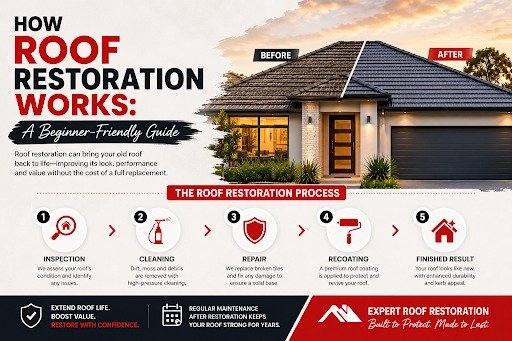
Here is what actually happens when a restoration is carried out properly. This is the full roof restoration process from start to finish, explained simply.
Step 1: Inspection
Before any work starts, the assessor goes over the tiles, ridge capping, bedding mortar, flashings, gutters, and roof cavity. A proper inspection takes time. It determines whether a restoration will actually hold or whether something more serious is going on underneath.
Step 2: High-Pressure Cleaning
The whole roof surface gets cleaned with high-pressure water. Moss, lichen, old coating residue, and built-up grime all come off. This step is not optional. Putting new coatings over a dirty surface is like painting over rust. It looks fine for a short time and then fails.
Step 3: Repointing and Rebedding
The old bedding mortar under the ridge capping is removed and replaced with fresh mortar. A flexible pointing compound goes over the top. The flexibility matters because it allows the mortar to move slightly as temperatures change without cracking. This is where most of the water entry points on a tiled roof get sealed.
Step 4: Tile Replacement
Cracked, broken, or missing tiles are replaced individually. Matching replacement tiles from the original supplier matters. A mismatched tile affects both how the roof looks and how well it sheds water at the joins.
Step 5: Sealing and Coating
A primer coat goes on first, followed by two coats of roof membrane or tile paint. This seals the surface, restores colour, and adds UV and moisture protection. It is also what gives a restored roof that refreshed appearance that makes the whole house look better from the street.
Step 6: Gutters
Gutters and downpipes get cleared and checked for damage and alignment. A blocked gutter on a freshly restored roof backs water up under the tiles and undoes the work faster than most people expect.
These are the roof restoration steps explained in the order they actually happen on site. Skipping any one of them compromises the result.
How to Keep Your Roof in Good Shape Between Restorations
A bit of routine attention goes a long way. These are the roof maintenance basics that make a genuine difference over time.
Practical ways to extend roof lifespan:
- Clear gutters twice a year, before and after the wetter months
- Trim overhanging branches that shade tiles and drop debris
- Treat moss or lichen as soon as it appears
- Book a professional inspection every two to three years
- Replace cracked or slipped tiles as they happen
The restorations that stay straightforward and affordable are almost always on roofs where these habits have been followed. The ones that become expensive are almost always the ones where they have not.
Restoration or Replacement: A Simple Way to Think About It
| Situation | What Makes Sense |
| Surface wear, structure intact | Restoration |
| Multiple broken tiles, solid underneath | Restoration with tile replacement |
| Timber structure compromised or sagging | Full replacement |
| The roof is over 50 years old, and no prior work has been done | Inspect first, then decide |
Roof restoration for beginners often comes down to one question: Is the roof structurally sound or not? If the structure is fine, restoration is almost always the right answer. A qualified assessor can tell you which situation you are in within a single inspection visit.